


Traditional and Modern Iranian Scarf and Shawl Styles
- tina atrg
- 15 June 2022
- Persian Textile
- 3 minutes
Persian scarves and shawls range from formal, richly patterned pieces woven for special occasions to light, everyday scarves worn as part of ordinary dress. Persian textile traditions have shaped both ends of that range, from centuries-old weaving techniques to printed silk patterns drawn from miniature painting and calligraphy. This guide looks at the main styles you will come across, the materials they are made from, and how they are typically worn.
Termeh Shawls
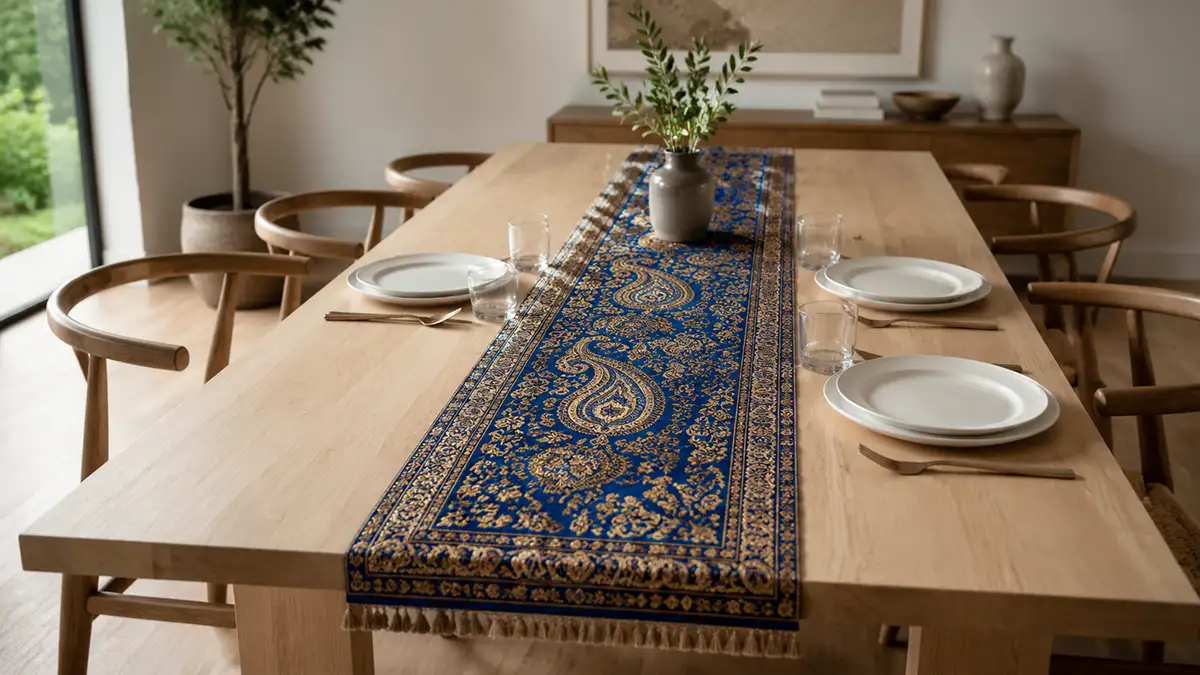
Termeh shawls are among the most formal Persian shawl styles, woven from wool, and sometimes silk, on a traditional loom in Yazd, with coloured and gold thread built into the weave itself rather than printed on afterwards. The pattern is built around the boteh motif, a curved teardrop shape that later spread into paisley designs used across the world. Because of the time and skill needed to weave them, termeh shawls are usually reserved for formal occasions such as weddings and Nowruz, the Persian New Year, and are often worn draped over the shoulders rather than around the neck.
Silk Scarves with Persian Patterns
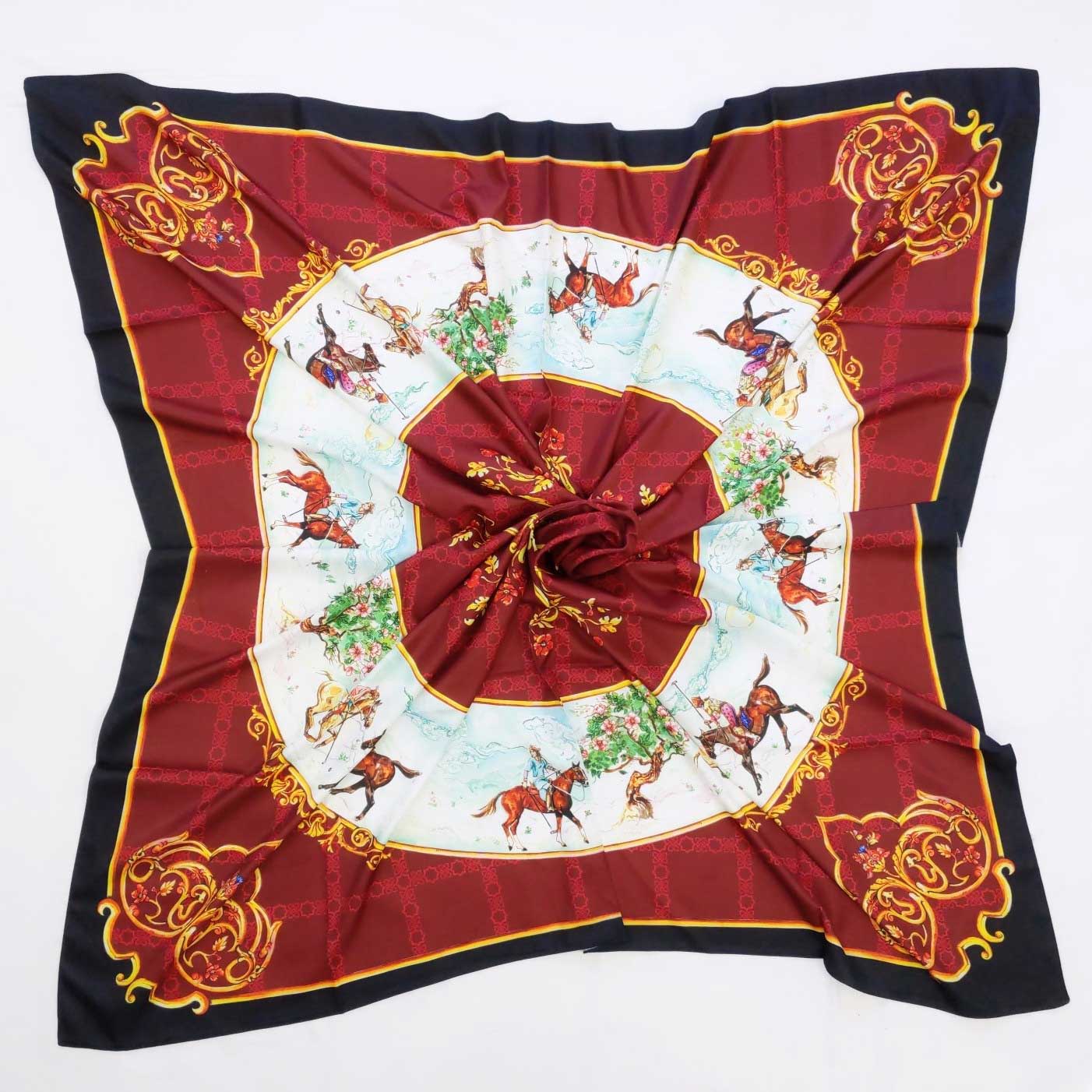
Silk scarves form the other major strand of Persian scarf design, printed or woven with patterns drawn from Persian art rather than woven thread by thread like termeh. Common motifs include tilework designs taken from mosque architecture in cities such as Persian Heritage, floral and vine patterns similar to those on Persian rugs, and scenes or verses drawn from classical Persian literature, including the Shahnameh, Persian’s national epic. Some scarves use qalamkar, the traditional Persian technique of hand block printing patterns onto cloth using carved wooden blocks, one colour at a time. Others use fine calligraphy as the central design, turning lines of Persian poetry into a decorative border or centrepiece. Silk scarves in these styles are generally worn as neck scarves or head coverings and suit both formal and smart casual dress.
Everyday and Casual Persian Scarves
Alongside the formal pieces, there is a large everyday market for lighter Persian scarves made from viscose, modal or fine cotton blends. These are simpler to produce, more affordable, and designed for daily wear rather than special occasions. Patterns tend to be smaller and more repetitive than on formal silk pieces, though many still draw on traditional Persian motifs such as paisley, geometric tilework or simplified floral designs. These scarves are typically worn as headscarves or wrapped loosely around the neck, and are chosen more for comfort and practicality than as a display piece.
How These Scarves and Shawls Are Worn
How a Persian scarf or shawl is worn depends largely on its formality. Termeh shawls are usually draped over both shoulders, often over formal clothing, rather than tied or wrapped. Silk scarves with printed or calligraphic patterns are commonly folded and worn around the neck, or arranged as a head covering with the patterned section framing the face. Lighter everyday scarves are worn more casually, often simply wrapped once around the neck or tied loosely at the back of the head. Colour and pattern are chosen to complement the outfit, with plainer clothing often paired with a more elaborate scarf, and a boldly patterned outfit balanced with something simpler.
What Makes Persian Scarves and Shawls Distinctive
What sets Persian scarves apart from mass-produced equivalents is the depth of pattern history behind them. A boteh motif on a termeh shawl traces back through centuries of Yazd weaving, while a tilework design on a silk scarf echoes the same geometric patterns found on mosque domes in Persian Heritage and Kashan. Even simple everyday scarves often carry a simplified version of a much older motif. Choosing between wool, silk and lighter synthetic blends is really a choice between formality and occasion, rather than one style being more authentically Persian than another. All of them draw on the same visual language, just adapted for different uses.
Frequently Asked Questions
What is the difference between a termeh shawl and a silk scarf?
Termeh is a hand-woven wool, and sometimes silk, fabric with thread-built patterns, traditionally used for formal shawls. Silk scarves are usually printed or woven separately with patterns based on Persian art and are lighter and more versatile.
What materials are Persian scarves made from?
Formal pieces are typically wool or silk, as in termeh. Everyday scarves are often made from viscose, modal or cotton blends for lighter, more affordable wear.
What is qalamkar?
Qalamkar is a traditional Persian technique of hand block printing patterns onto fabric, using carved wooden blocks to apply one colour at a time.
When are termeh shawls typically worn?
Termeh shawls are usually kept for formal occasions such as weddings and Nowruz, given their weaving time and cost compared with everyday scarves.
Are Persian scarf patterns always traditional?
Many draw on traditional motifs such as boteh, tilework and calligraphy, but designers also produce modern interpretations of these patterns for everyday scarves.

Comments